Guest post. This article was written by a guest contributor; some links in it may be sponsored.
Everest Base Camp sounds like a fairy tale but also brings snow-covered peaks, cold winds, and an actual test of endurance. However, the experience of the Everest Base Camp Trek goes beyond a spiritual and physical challenge; it is a journey into the historical past of the great Himalayas and a testament to the strength and resilience of those who undertake it.
In this story4 sections
Everest Base Camp sounds like a fairy tale but also brings snow-covered peaks, cold winds, and an actual test of endurance. However, the experience of the Everest Base Camp Trek goes beyond a spiritual and physical challenge; it is a journey into the historical past of the great Himalayas and a testament to the strength and resilience of those who undertake it.
Where Legends Were Forged
First, the history. Tenzing Norgay and Edmund Hillary first climbed Mount Everest in1953. Our story starts long before Hillary and Tenzing. Imagine the Sherpa people living in the dangerous Khumbu Valley 700 years ago. They made paths and also made their home among Everest Regions. Second, the experience.
The Sherpa people came migrating here to get a better standard of living, and they also introduced their traditions to this place. Their first monastery was constructed above upper Pangbouche, and the place we will visit.
They built trails and monasteries in surprising places. Lastly, the main reason people trek these trails is to reach the end: an altitude of 5,364 meters / 17599 ft.
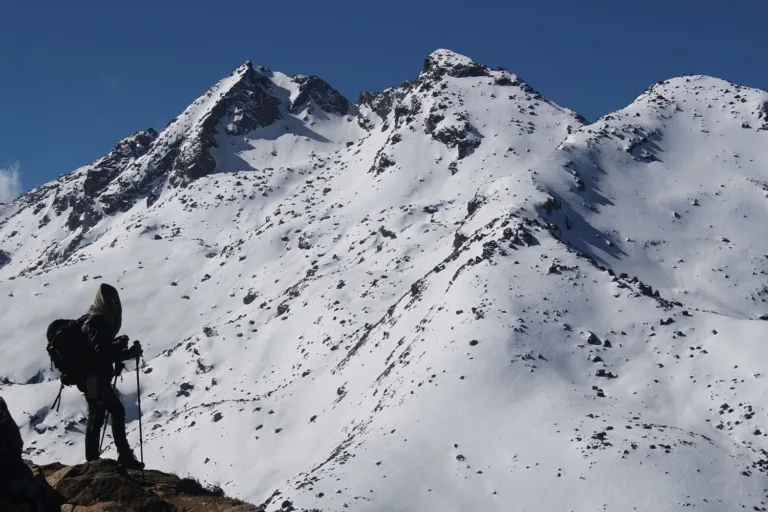
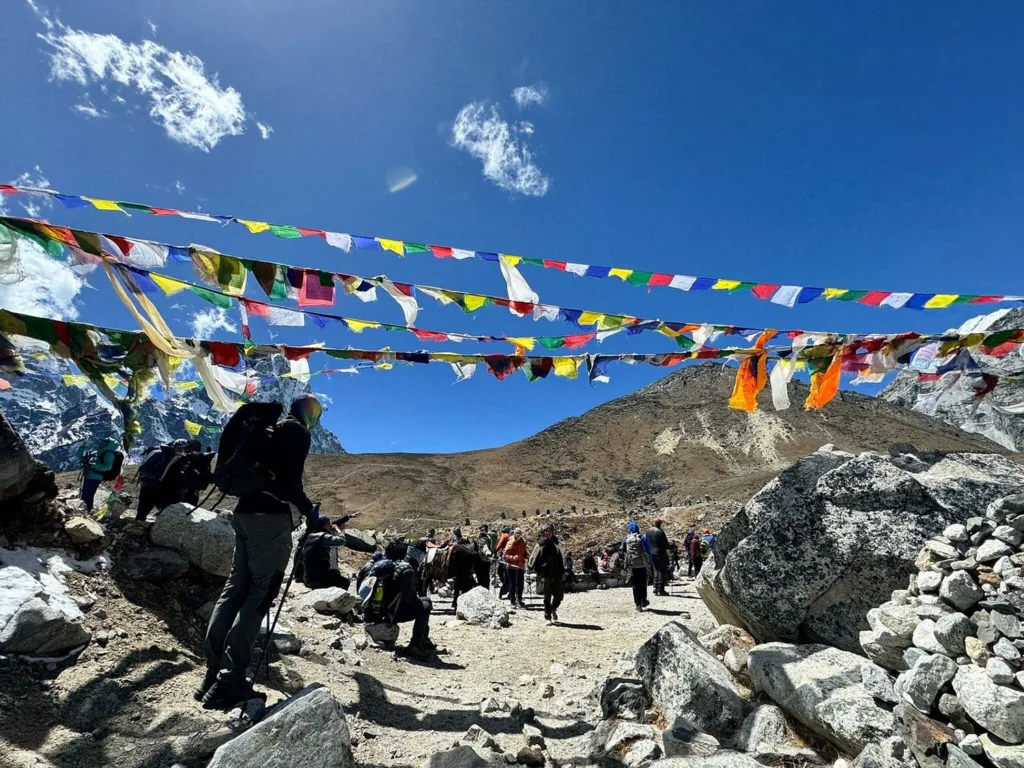
It takes 10-15 days to hike through Lukla, Namche Bazaar, and the famous Tengbouche and then climb to the Kala Patthar, 5,545 meters / 18192.3 ft. There, you will find Mount Everest, one of the Seven Natural Wonders of the World, glistening with sunlight. It’s a view that will long last in your memory forever.
General Information About EBC
Difficulty Level: The EBC trek is moderately difficult, though it’s advisable for anyone with strong endurance and physical strength. It can also be done by anyone who has not gone trekking before.
Accommodation: Teahouses/guesthouses: Basic Lodges for Trekking; electricity, websites/internet (occasionally charging), meals, and sanitation are available on fair to good standard all the way.
Two permits are needed: If you plan to go to EBC, you must pay for a Khumbu Pasang Lhamu entry ticket and a Sagarmatha National Park passage ticket.
Maximum Point: You might think the best view and the highest point of the Everest trek will be at the base camp, but you are completely wrong. The maximum point you will reach is Kala Patthar, at 5,640 meters/ 18,500 feet, although the EBC is 5,364 meters/ 17,594 ft.
Flight Info: Lukla Airport commonly uses Manthali Airport in Ramechap during the two main seasons within a year: the spring season (March- April) and the autumn season (September—November). Ramechap/Manthali Airport is around 132km from Kathmandu, which takes approximately a 4-5 hour drive.
Currency: Only Nepalese currency is accepted; ATMs are available only in Lukla and Namche Bazaar.
Top Sights You Won’t Forget
1. Sagarmatha National Park is a protected zone covering the mountain region of Everest and is also listed on the UNESCO World Heritage List. This park is said to be the highest natural park in the world, starting at 2,800 meters above sea level and reaching 8,848 m! Watch out for the rare himalayan Thar, musk deer, red panda, and even the elusive snow leopards.
2. Visit the Hillary Museum in Namche Bazaar and discover more about the legendary climber. This museum is dedicated to Sir Edmund Hillary and gives a general idea of Sherpa people’s clothing, instruments, and photographs depicting life in the area of Everest.
3. Namche Bazaar, also known as the market of Sherpa, is a must-visit place. This beautiful town at 3440 meters is perfect for a little rest, getting used to the high altitude, and, of course, the true taste of Sherpa culture and the lovely view of the mountains.
4. When in Tengboche village, take a picture with the famous Ama Dablam mountain in the background. Visit Tengboche Monastery, the largest Buddhist monastery in the Khumbu region. This place is also famous for its daily rituals and colorful Mani Rimdu festival.
5. At Base Camp, you can enjoy a breathtaking view of the world’s tallest mountain, Everest (5,364m), and the surrounding mountains of Lhotse, Nuptse, Pumori, and Khumbu Glacier.
6. Ascend to Kala Patthar (5,545m), the maximum point of the journey. This provides you with magnificient views of Mt. Everest during sunrise/sunset and other tall peaks. Watch out for Khumbu Glacier, the highest glacier in the world, situated near EBC.
7. Immerse yourself in Sherpa culture! Explore charming villages, witness their traditions, and experience legendary hospitality.
Essential Tips You Must See
- For Internet access, use the Everest Link Card, which costs USD 2-4 less than Airlink. Remember that you will also need a SIM card for Nepal. You can get it from Nepal Telecom or Ncell.
- For power, you can use two- and three-pin plug points, which cost USD 1-4 per hour. Nepal electrical supplies are 230V in voltage and 50 in frequency.
- Charging facilities are commonly used and required during peak seasons. So, do carry power banks as an alternative and in order to spend less on charging.
- You should include a cash amount of 18000-20000 NPR (about $180- 200 USD) per individual for extra expenses such as showering, charging devices, and Wi-Fi during the EBC tour. There are money exchange centers, or you can go to the ATM stations, which are open 24/7 in KTM.
- To enjoy the best climatic conditions, it is recommended that you travel and do hiking activities from March to May or September to December.
- It is advised to start physically and mentally preparing your body according to the consultation of our trekking leaders 2-3 months prior to the trek.
- Pack protein bars and dried fruits for snacking up the mountains. Lemon, green tea, tea with lemon, or garlic soups are among the most recommended beverages for rehydration when ascending to high altitudes.
- Share the responsibility when going on a trip. Do not use bottled water and other plastics for environmental and aesthetic purposes of the area.
- Besides, do not forget to take pictures with a camera against a beautiful background of the mountains of the Everest region.
- Don’t hesitate to tip your guides for their support – it is a tradition in Nepal. EBC trek is not the average trek, unlike others that you think. It is a life-changing journey that will remain in your heart forever. Its an opportunity to leave the crowded city behind for a clear sky and snow-capped mountains and truly immerse yourself in the heart of the Himalayas.
Imagine trekking alongside friendly Sherpas and their villages. Stand in awe at the foot of the mighty Everest, feeling small yet strangely empowered by its grandeur.